


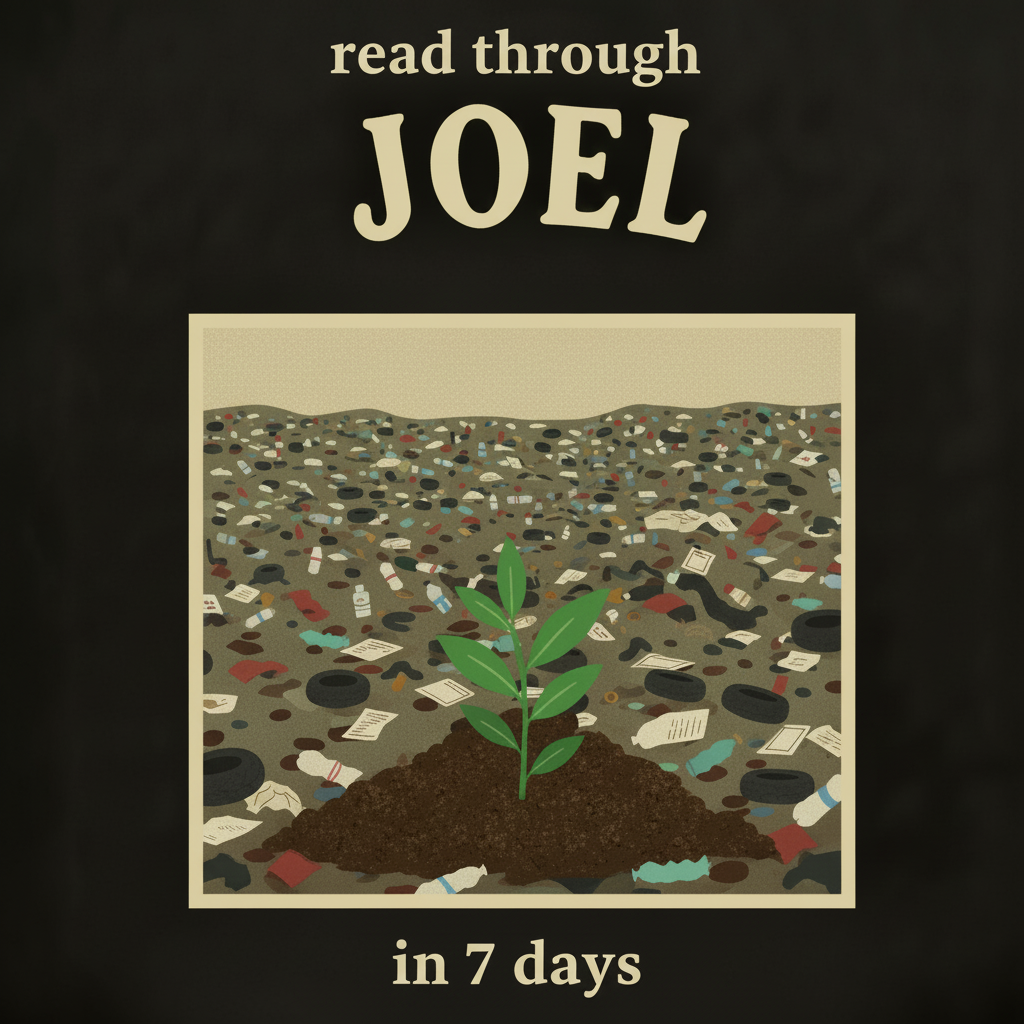
Joel centers on a devastating locust plague that serves as a powerful motif for divine judgment. The book interprets this ecological catastrophe as the "Day of the Lord"—a time of unparalleled terror and darkness—urging the people of Judah to repent with fasting, mourning, and genuine contrition. The prophet insists that God is "gracious and merciful, slow to anger, and of great kindness" (Joel 2:13), holding out the promise that true repentance will lead to restored agricultural blessings and the removal of the invading northern army. The book's vision then dramatically expands, promising a future outpouring of God's Spirit upon all people, a prophecy famously cited by the Apostle Peter in Acts 2. Joel concludes with a portrayal of God judging the nations in the Valley of Jehoshaphat while providing refuge and eternal security for Judah and Jerusalem, establishing His people as a blessed and holy community.




-
The Overwhelming Crisis
Devotional Thought: The book opens with a catastrophe. A locust plague of historic proportions has stripped the land bare. Joel uses this tangible disaster as a picture of a spiritual reality. What "locusts" have invaded your life or our world, leaving a sense of emptiness or ruin? This passage invites us to honestly name our losses and recognize how fragile our security can be.
Daily Spiritual Practice: Lament. Find a quiet space and practice the spiritual discipline of lament. Write down or pray about a current personal or global "plague" that causes you grief. Bring this raw honesty before God, just as Joel did for his people.
Conversation Starter with Your Kiddos: "If a giant swarm of bugs ate all the food in our house, how would we feel? What would we do? The prophet Joel saw something like that happen, and he wanted people to know that even when really bad things happen, God is still listening."
-
A Call to Return
Devotional Thought: Joel's response to the crisis is not a quick fix; it's a solemn call to repentance. He tells the priests and the people to grieve, fast, and return to the Lord with all their hearts. The path to restoration begins with turning away from self-reliance and turning toward God. Repentance isn't about guilt; it's about realignment.
Daily Spiritual Practice: Examine and Pray. Spend time in self-examination. Ask God to reveal any areas where you have relied on your own strength instead of His grace. Confess this and pray a simple prayer of return: "Lord, I turn my heart back to you."
Conversation Starter with Your Kiddos: "What does it mean to say 'I'm sorry' and really mean it? Joel told the people that when they messed up, the most important thing was to turn their hearts back to God, who is always ready to forgive."
-
The Day of the Lord is Coming
Devotional Thought: The imagery shifts from agricultural locusts to a terrifying, apocalyptic army. This is "the day of the LORD"—a day of judgment and darkness. It's a sobering reminder that God takes sin seriously and that a final reckoning is coming. This truth underscores our deep need for a Savior.
Daily Spiritual Practice: Awe and Reverence. Read this passage slowly, reflecting on the power and holiness of God. Write down what it teaches you about God's character. Spend a few minutes in silent awe of Him.
Conversation Starter with Your Kiddos: "The Bible talks about God being like a loving parent, but also incredibly powerful, like a superhero. Why is it important that God is both loving and powerful?"
-
The Nature of God’s Heart
Devotional Thought: Amid the warning of judgment comes one of the most beautiful passages in Scripture. God's call to repentance is framed by His character: "return to me, for he is gracious and compassionate, slow to anger and abounding in love." Judgment is God's strange work; redemption is His heart. His warnings are always an invitation to mercy.
Daily Spiritual Practice: Memorize and Meditate. Memorize Joel 2:13. Throughout your day, meditate on each characteristic of God mentioned: gracious, compassionate, slow to anger, abounding in love. Thank Him for each one.
Conversation Starter with Your Kiddos: "What's the difference between someone who gets angry really fast and someone who is 'slow to anger'? The Bible says God is slow to anger. Why is that such a good thing for us?"
-
The Promise of Restoration
Devotional Thought: Here, God responds to His people's repentance with lavish promises of restoration. He will drive out the enemy, restore the years the locusts have eaten, and pour out abundance. This is a picture of God's redemption—He doesn't just forgive; He restores and makes whole what was broken.
Daily Spiritual Practice: Thanksgiving and Trust. Make a list of areas in your life, past or present, that feel "eaten away" by difficulty, sin, or loss. Offer each one to God in prayer, thanking Him for His power to restore and make things new.
Conversation Starter with Your Kiddos: "Have you ever had a toy break and then someone fixed it to be even better than before? God promises to do that with our hearts and lives—to fix what's broken and make it new."
-
The Outpouring of the Spirit
Devotional Thought: This is the great culminating promise of Joel, famously quoted by Peter at Pentecost (Acts 2). God promises to pour out His Spirit on all people, regardless of age, gender, or status. This is an egalitarian, powerful, and personal work of God. It is the ultimate answer to the plague of sin and separation.
Daily Spiritual Practice: Pray for Fulfillment. Thank God for the gift of the Holy Spirit, given to all who believe in Jesus. Pray for a fresh outpouring of the Spirit in your own life, your family, and your church community.
Conversation Starter with Your Kiddos: "God promised that His Spirit would be for everyone—sons and daughters, grandpas and kids. What does it mean that God wants to be close to everyone who loves Him?"
-
The Final Judgement & Blessing
Devotional Thought: The book concludes with God's final judgment on the nations that opposed His people and the eternal blessing for those who belong to Him. "The LORD dwells in Zion." The story that began with locusts and devastation ends with God's presence and everlasting safety. This is the Christian hope: that in Christ, we are on the side of redemption.
Daily Spiritual Practice: Hope and Assurance. Read this chapter with a sense of hope. The injustices of the world will be made right. Write down what it means for you that God's final word is not judgment, but salvation and His presence for His people.
Conversation Starter with Your Kiddos: "The story of Joel starts with a big problem but ends with God making everything right and safe forever. How does knowing the end of the story help us when we have a bad day?"

VIDEOS
The Bible Project Guide https://bibleproject.com/guides/book-of-joel/
The Bible Project Summary https://www.youtube.com/watch?v=zQLazbgz90c
PODCASTS
BEMA: Trust the Story - https://www.bemadiscipleship.com/60
The Bible Project - https://thebibleproject.buzzsprout.com/1728449/episodes/8769251-the-bible-project-sixty-six-books-chapter-29-joel
The Bible for Normal people - https://thebiblefornormalpeople.com/episode-198-anna-sieges-the-minor-prophets-and-why-we-shouldnt-call-them-that/
BOOKS